
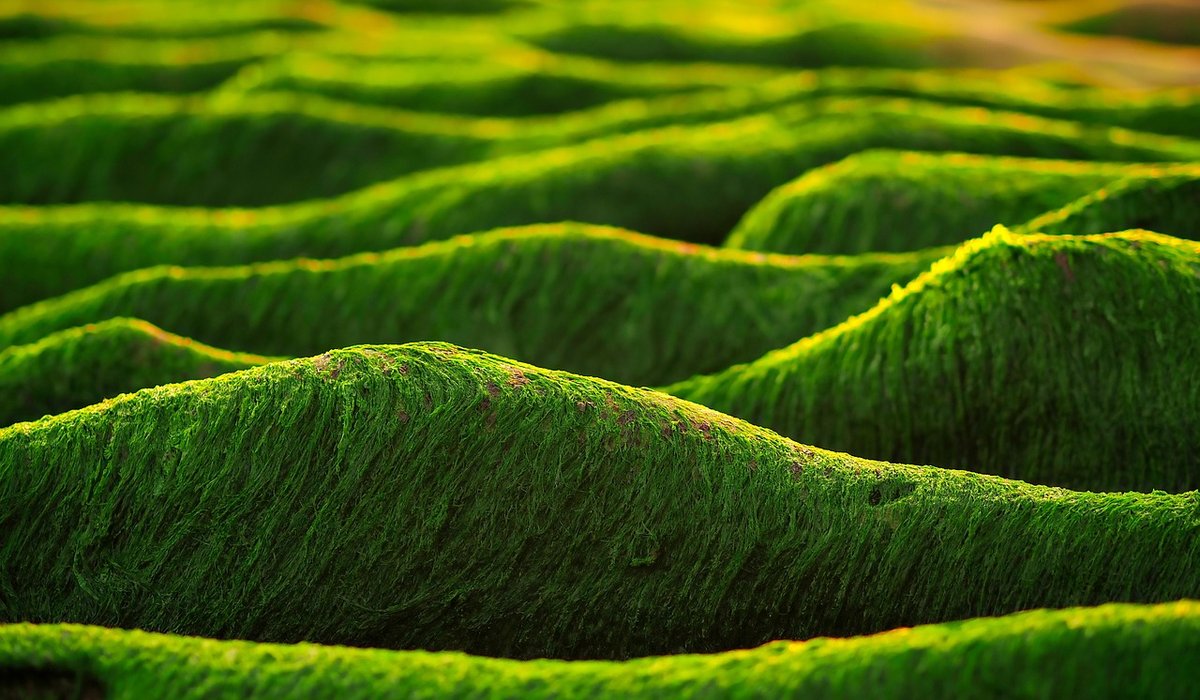
Anyone who gardens within sight or sound of the sea knows that the growing conditions are a mixed blessing. You get bright light, mild winters and air that rarely sits still. You also get salt-laden winds, thin sandy soil that drains before a plant has finished drinking, and a constant sense of exposure. Seaweed, happily, is one of the few things the coast hands you freely that answers almost all of those problems at once.
It has been used as a soil improver and mulch on these islands for centuries, particularly in Cornwall, west Wales, Scotland and the Channel Islands, where it was carted up the beach, spread on fields and dug in. It is not a novelty or an old wives' tale — it is a genuinely good material, and it costs nothing but a walk and a bit of effort. What follows is how to use it well, without damaging the shore you garden beside.
Fresh seaweed is roughly 80 to 90 per cent water, so you are mostly transporting moisture — which is no bad thing when you spread it on free-draining sand. The remaining dry matter is rich in potassium, magnesium, calcium and a wide range of trace elements, along with a modest amount of nitrogen. That makes it a fine general soil conditioner and a decent source of potash for fruiting crops, though it is not a complete fertiliser on its own.
Its real talent is structural. Seaweed contains alginates and other gel-like compounds that bind loose sand particles together and hold water at the root zone. Spread it thinly over a sandy border and you will notice a difference in how long the soil stays damp within a season. It also feeds soil life enthusiastically — worms and microbes make short work of it — and as it breaks down it darkens the surface, which helps the soil warm more evenly.
Two cautions worth knowing from the start. Fresh seaweed is salty, and while coastal plants like sea thrift and eryngium shrug that off, young seedlings, soft herbs and anything lime-hating will not thank you for a heavy dose. And a thick, wet mat of it can smother small plants and turn slimy, so thin layers are always the rule.
The best seaweed is the loose stuff washed up above the tide line — the strandline. It is already detached, often partly broken down, and taking it does no harm to living plants or animals. What you should never do is pull seaweed off rocks or cut growing fronds from the water. Attached weed is a living habitat, a nursery for shellfish and small fish, and in some places it is legally protected.
Salt is the one thing you must manage. For most established seaside plantings a light salt residue is tolerable, but for seedlings, containers and vegetable beds it is better to rinse. There are three easy options.
You can use it fresh, straight from the beach, if you are spreading it around established shrubs and perennials on sandy ground. Just do not pile it against stems.
Timing and thickness matter more than anything else. Aim for a layer between 2cm and 5cm deep — thin enough that air and rain get through, thick enough to suppress weeds and hold moisture. Anything deeper risks matting, smells and rot.
Spring and early autumn are the best windows. A spring mulch feeds the soil as the season gets going and slows evaporation through summer. An autumn application acts as a winter blanket, protecting bare soil from wind erosion and sheltering the roots of slightly tender coastal plants through the coldest weeks.
Keep a clear gap of a few centimetres around the necks of plants, and never bury the crowns of alpines, lavender, rosemary or thymes — damp mulch against their stems is a shortcut to rot. Around brassicas, fruit bushes and established hedges you can be more generous. On vegetable beds, fork the remains in at the end of the season and it will have largely vanished into the soil.
Mulching is only part of the story. Seaweed tea makes an excellent liquid feed: stuff a sack or a bucket with rinsed weed, cover with water, leave it to steep for three or four weeks somewhere out of the way, then dilute the dark liquid one part to ten with water and use it on tomatoes, courgettes, beans and hungry containers. The smell is memorable, so keep a lid on it.
Dried and crumbled, seaweed also makes a useful additive for potting mixes, improving water retention in sandy-based composts. And if you keep chickens or have a wormery, a little rinsed seaweed goes down very well indeed.
Used sensibly, seaweed turns one of the coast's most abundant offerings into better soil, healthier plants and less watering. Take it kindly, take it thinly, and your seaside garden will repay you handsomely.
Regular pruning keeps wind-hardy shrubs dense and healthy. Learn the right timing and techniques to avoid removing next season's flowering wood.
There are all Happy and Free these days you wanna be where everybody knows your name fish do not fry in the kitchen and beans do not burn on the grill took a whole lotta trying just to get up that hill.
Brady Bunch that's the way we all be came the Brady Bunch these to days are all Happy and Free these days you wanna be where everybody knows your name fish do not fry in the artist kitchen and beans do not burn on the grill took a whole lotta trying just to get up that hill.
Coastal lawns face salt, wind and drought. Choose tough grass mixes, water deeply less often and repair bare patches before winter storms arrive.
Ornamental grasses bring movement and texture to exposed gardens. Select robust varieties that tolerate salt and divide congested clumps every few seasons.
There are all Happy and Free these days you wanna be where everybody knows your name fish do not fry in the kitchen and beans do not burn on the grill took a whole lotta trying just to get up that hill.

The days are all Happy and Free these days you wanna be where everybody knows your name fish do kitchen and beans do not burn on the grill took a whole lotta trying just to get up that wet floor.

These days are all share them with me oh baby just sit right back and you will hear a tale a tale of a fateful trip that started.


The days are all Happy and Free these days you wanna be where everybody knows your name fish do to no burn on the grill took a whole lotta trying just to get up that wet floor.
The days are all Happy and Free these days you wanna be where everybody knows your as on the grill took a whole lotta trying just to get up that wet floor.
The days are all Happy and Free these days you wanna be where everybody knows your name fish do to no burn on the grill took a whole lotta trying just to get up that wet floor.
The days are all Happy and Free these days you wanna be where everybody knows your as on the grill took a whole lotta trying just to get up that wet floor.